
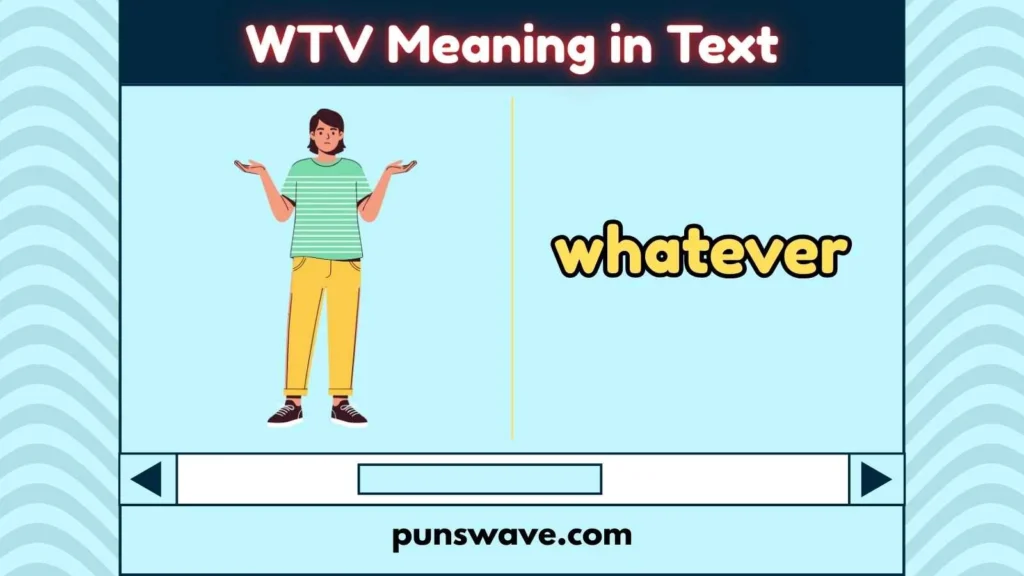
Ever received a message that simply said “wtv” and left you feeling confused, annoyed, or curious? 😕 You’re not alone. In today’s fast-paced digital world, short text abbreviations dominate our conversations. Among them, WTV stands out because its meaning can shift depending on context, tone, and relationship.
The wtv meaning in text is more than just a shortcut—it often carries emotion, attitude, and sometimes even passive-aggressive energy. Understanding it can save you from miscommunication, awkward replies, or unnecessary arguments.
In this in-depth guide, we’ll break down exactly what WTV means in text, where it came from, how people actually use it, and when you should (or shouldn’t) use it yourself.
What Does WTV Mean in Text? 🤔
At its core, WTV is a shortened form of the word “whatever.” In text messages, chats, and social media, people use it to express:
- Indifference 😐
- Agreement without enthusiasm
- Dismissal or lack of interest
- Emotional distance
So, the basic wtv meaning in text is:
WTV = “Whatever” (I don’t mind / I don’t care / I’m done discussing this)
However, the real meaning often depends on how and why it’s used.
The Emotional Tone Behind WTV 😶
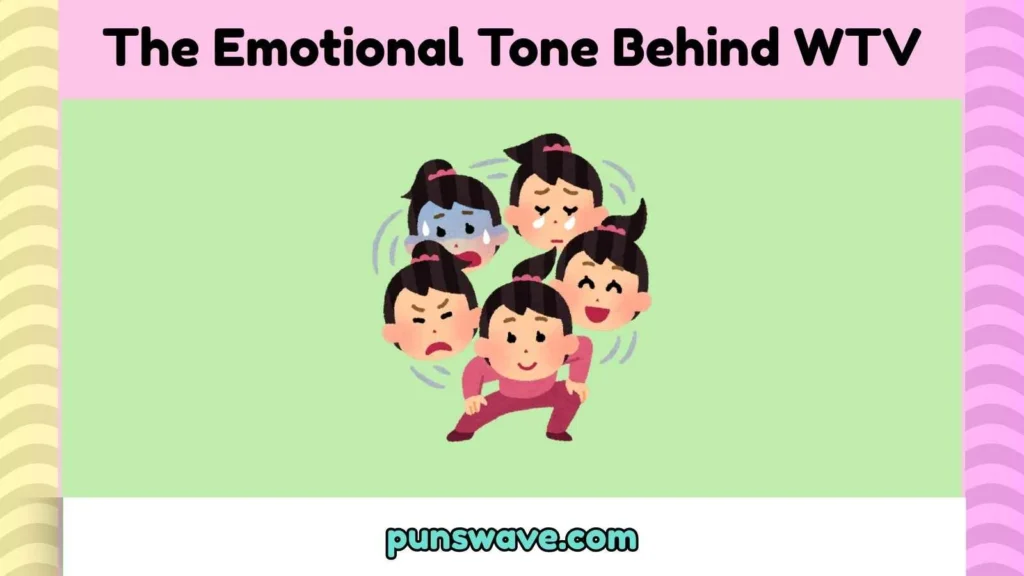
Unlike neutral abbreviations such as “ok” or “lol,” wtv carries emotional weight. That’s why it can sometimes feel rude or cold.
Common Emotional Tones of WTV
- Casual indifference: “I’m fine with anything.”
- Frustration: “I don’t want to argue anymore.”
- Dismissiveness: “Your opinion doesn’t matter to me.”
- Emotional shutdown: “I’m done engaging.”
Understanding this emotional layer is crucial when interpreting the wtv meaning in text.
Origin of WTV: Where Did It Come From? 🕰️
The abbreviation wtv originated from early internet chat rooms, SMS culture, and instant messaging platforms where users wanted to type faster and save character space.
As texting evolved, people started dropping vowels from common words. “Whatever” naturally became:
- Whatever → whatevr → wtevr → wtv
Over time, wtv gained popularity on platforms like:
- SMS texting 📱
- WhatsApp & Messenger
- Snapchat
- Instagram DMs
- Online gaming chats 🎮
WTV Meaning in Text vs Spoken Language 🗣️
When spoken out loud, people rarely say “W-T-V.” They say “whatever.” But in text, wtv feels sharper and more detached.
| Form | Perceived Tone |
|---|---|
| “Whatever” | Casual, sometimes playful |
| “wtv” | Cold, dismissive, emotionally distant |
This is why context matters so much when decoding the wtv meaning in text.
How WTV Is Commonly Used in Conversations 💬
Let’s explore how wtv appears in real-life conversations.
1. Showing Indifference
Example:
“Pizza or burgers?”
“wtv”
Here, wtv simply means “I don’t mind.”
2. Ending an Argument
“You never listen to me.”
“wtv, think what you want.”
In this case, the wtv meaning in text signals frustration and emotional withdrawal.
3. Passive-Aggressive Response
“I can’t come tonight.”
“wtv.”
Short. Cold. Loaded with emotion 😬
Is WTV Rude? ⚠️
Whether wtv is rude depends on:
- Your relationship with the person
- The conversation topic
- The emotional context
In friendly chats, it can be harmless. In emotional discussions, it can feel dismissive or disrespectful.
Rule of thumb: If you wouldn’t say “whatever” out loud in that situation, don’t type wtv.
WTV vs Similar Slang Terms 🔍
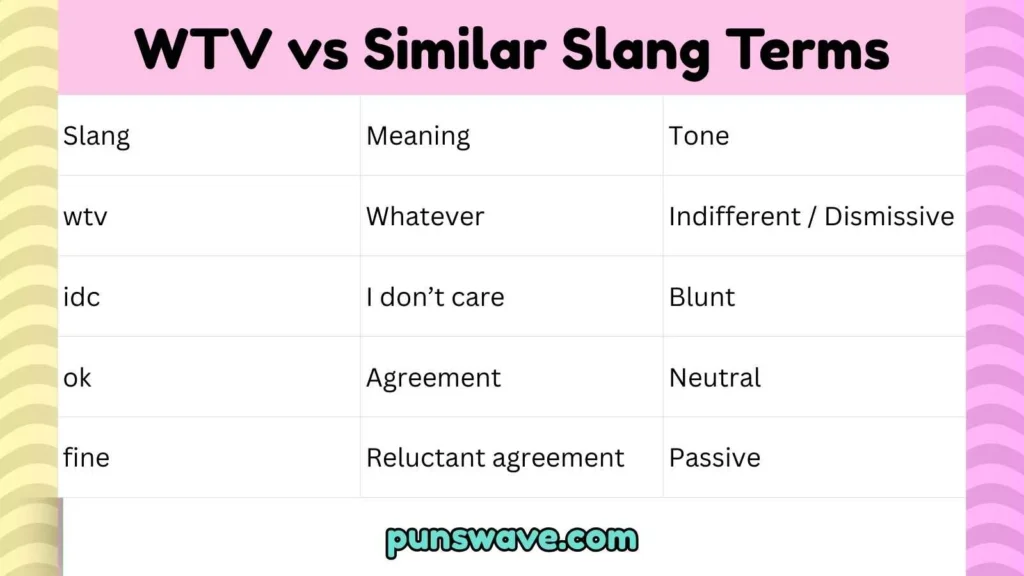
| Slang | Meaning | Tone |
|---|---|---|
| wtv | Whatever | Indifferent / Dismissive |
| idc | I don’t care | Blunt |
| ok | Agreement | Neutral |
| fine | Reluctant agreement | Passive |
Among these, wtv often feels the coldest.
WTV Meaning in Text on Social Media 📲
On social platforms, wtv often appears in comments, captions, or replies.
Example:
“People will judge you no matter what. wtv.”
Here, wtv reflects emotional resilience or detachment.
It’s also used to appear unbothered 😎
Psychological Insight: Why People Use WTV 🧠
From a communication psychology perspective, wtv acts as a defense mechanism. People use it when:
- They feel unheard
- They want emotional distance
- They’re avoiding conflict
- They’re done explaining themselves
This deeper layer adds complexity to the wtv meaning in text.
When You SHOULD Use WTV ✅
- Casual group chats
- Low-stakes decisions
- With close friends who understand your tone
Example:
“Movie night at my place or yours?”
“wtv works”
When You Should AVOID Using WTV ❌
- Professional conversations
- Emotional discussions
- With someone you don’t know well
- During conflict resolution
In these cases, wtv can damage trust and communication.
Better Alternatives to WTV 💡
If you want to sound polite or emotionally aware, try:
- “I’m okay with whatever you decide”
- “I don’t have a strong preference”
- “Either option works for me”
These keep the meaning without the emotional risk.
WTV Meaning in Text Across Age Groups 👥
Different generations interpret wtv differently:
- Teens: Casual, expressive
- Young adults: Emotional or dismissive
- Older users: Often perceived as rude
Always consider your audience.
FAQs
What does wtv mean in text from a girl?
It can mean indifference, frustration, or emotional distance depending on context.
Is wtv always negative?
No. In casual chats, it can simply mean “I don’t mind.”
Does wtv mean someone is mad?
Often, yes—but not always. Look at the conversation tone.
Can wtv be playful?
Yes, among close friends who understand each other’s texting style.
Should I reply to wtv?
Yes, but respond calmly to avoid escalating tension.
Final Thoughts:
The wtv meaning in text may seem simple, but it carries emotional depth. While it literally means “whatever,” its true impact depends on tone, context, and relationship.
Used carefully, it can express flexibility. Used carelessly, it can shut down communication. Knowing the difference gives you control over your digital conversations.

I love exploring the meaning behind words and ideas, turning simple thoughts into clear and engaging content. At Punswave, I focus on explaining meanings in an easy and interesting way for everyone.
Related posts:
 WTW meaning in text Clearly Explained – What It Really Means in Messages 2026
 GTS Meaning in Text Explained Simply – The Real Definition People Miss 2026
 WYO Meaning in Text Clearly Explained – What It Really Means in Messages 2026
 WYLL Meaning in Text Secret Slang Explained for Modern Messaging 2026