Have you ever received a message with “WTD” and felt momentarily puzzled? 🤔 You’re not alone.
With texting slang evolving faster than ever, it’s easy to feel left behind.
In this expert article, we’re going to break down the WTD meaning in text, trace its origin, show real life examples, and explain how to use it properly—like a pro 📱💬.
What Is the WTD Meaning in Text?
WTD stands for “What the Deal?” – a casual phrase used in texting and online conversations to ask what’s going on or seek clarification. It’s informal, expressive, and comes up often in chat apps, social media, and message threads.
The first 100 words of this article include the term so that WTD meaning in text becomes clear immediately. This helps you understand the context right away 💡.
Quick Takeaway
- WTD = What the Deal?
- Used in texting and online conversations
- It’s informal but widely understood
Why WTD Became Popular 📈
Texting slang thrives on speed and simplicity. Words and phrases get shortened so you can communicate faster. Instead of typing a full sentence like “What is the deal with this?”, people love using abbreviations like WTD to save effort.
Here’s why it caught on:
- ✔ Short and quick to type
- ✔ Easy to remember
- ✔ Works across platforms (SMS, WhatsApp, Discord)
Origin of WTD – A Brief History 🧠
The abbreviation WTD likely emerged from early internet forums and texting culture. As users looked for ways to shorten everyday phrases, acronyms like LOL, BRB, WTF paved the way. WTD fits that pattern.
It’s similar to other texting slang that started online and spread into everyday messaging. Think of it like shorthand for casual conversation—just like scribbling a note fast 📝.
Fun Fact
Many texting abbreviations began in chat rooms before smartphones were a thing!
Different Meanings of WTD 🤷♂️
While the most common meaning of WTD in texting is “What the Deal?”, context can change things slightly. Let’s explore variations:
- What’s the Deal? – Most common
- What to Do? – Sometimes used when asking for advice
- Why the Delay? – Less common but possible
Keep in mind: context is king. The tone, audience, and conversation flow will often tell you which meaning fits best.
WTD vs WTF – What’s the Difference?
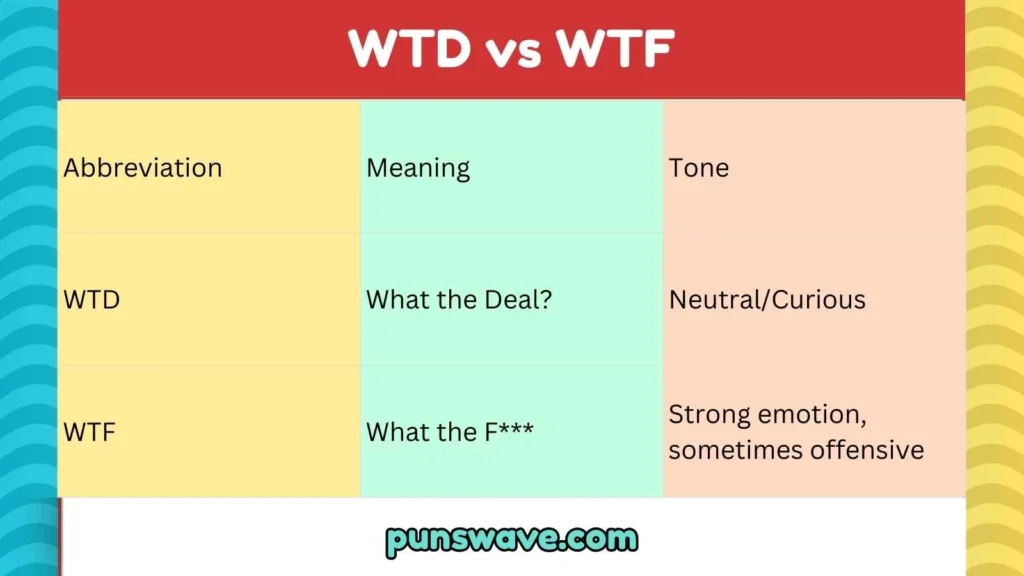
These two may seem similar, but they are different:
| Abbreviation | Meaning | Tone |
|---|---|---|
| WTD | What the Deal? | Neutral/Curious |
| WTF | What the F*** | Strong emotion, sometimes offensive |
👉 As you see, WTD is much softer and less aggressive than WTF. That’s why people often prefer it in casual, friendly chats.
Real Examples of WTD in Text 📱
Seeing real examples makes it easier to understand how WTD meaning in text works. Here are common scenarios:
- A friend texting late: “Hey, WTD? Why are you up so late?”
- Group chat confusion: “WTD with these plans?”
- After a weird message: “WTD? That emoji made no sense 😅”
Notice how in each example, WTD helps express curiosity or confusion without being rude.
How to Use WTD Appropriately ✍️
Using acronyms like WTD can be fun, but it’s important to use them in the right context. Here’s a quick guide:
- 👍 Good: Texting friends or casual conversations
- ⚠️ Neutral: Team group chats at work (watch tone)
- ❌ Avoid: Formal emails or professional writing
If you’re unsure, try replacing WTD with the full phrase (e.g., “What’s the deal?”) and see if it still fits.
WTD in Social Media 🎯
You’ll encounter WTD everywhere: Instagram comments, Twitter threads, TikTok captions, and memes. It’s especially popular in fast-paced conversations where brevity matters.
Here’s a visual example:
- “WTD? This trend is everywhere!”
- “WTD?? 😂😂😂”
Social users often pair it with emojis to show tone. Emojis like 🤔, 😂, or 😅 help make the meaning clear.
Emojis That Pair Well with WTD 😄
Emojis can change how WTD feels. Want to sound playful, confused, or serious? Try these:
- 🤔 – Curious or confused
- 😅 – Light-hearted or funny
- 😂 – Playful or joking
- 😐 – Neutral or serious
Choosing the right emoji helps your message land the way you want it to 🎯.
Common Misunderstandings 🤨
Some people confuse WTD with other acronyms like WYD (What You Doing) or WTF. Here’s a quick comparison:
- WTD – What’s the Deal?
- WYD – What You Doing?
- WTF – What the F***
Keeping these straight helps avoid miscommunication 🤓.
WTD in Texting vs. Email ✉️
While WTD works great in casual messaging, it’s not suitable for formal emails. Let’s see why:
- ✔ Texting: Friendly tone is expected
- ✔ Group chats: Informal is okay
- ✖ Email: Professional expectations differ
If you need to ask “What’s the deal?” in an email, write it out fully and politely. For example:
“Could you clarify what’s happening with the schedule?”
WTD in Different Age Groups 👶👴
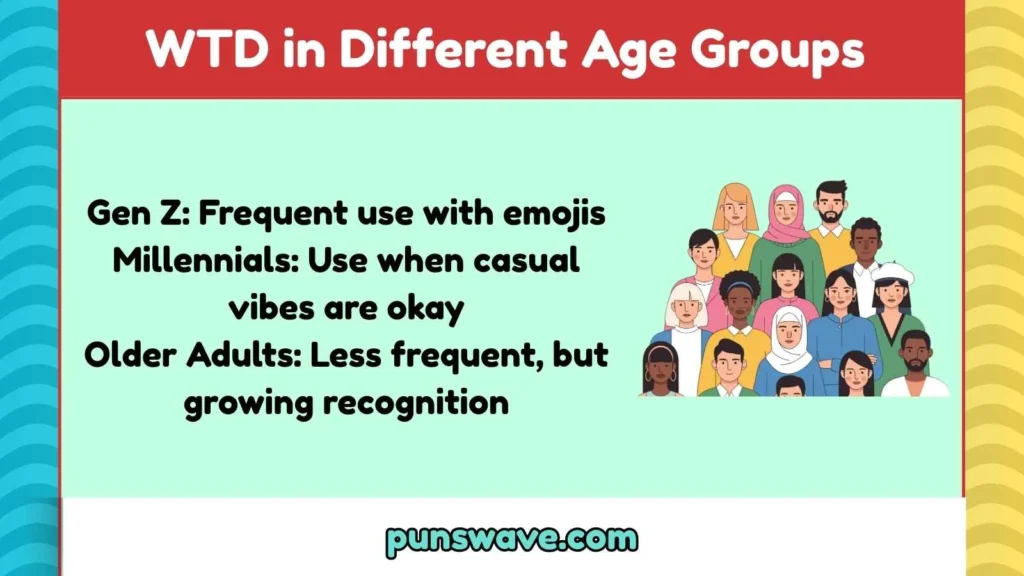
Texting slang trends vary by age. Younger users may use WTD more often, while older adults might prefer full phrases. That’s totally normal!
- Gen Z: Frequent use with emojis
- Millennials: Use when casual vibes are okay
- Older Adults: Less frequent, but growing recognition
This shows how language evolves with culture and technology 🌍.
Creative Ways to Say WTD
If you want variety in your messages, here are some alternatives to WTD:
- What’s going on?
- What’s up?
- Can you explain?
- What’s happening?
Each of these works well depending on the tone you want to convey.
WTD – Pitfalls to Avoid 🚫
Even though WTD is fun to use, here are a few things to be careful about:
- ❌ Don’t use it in formal requests
- ❌ Don’t assume everyone knows it
- ❌ Avoid in professional environments
Always match your language to your audience 🌟.
Top 5 WTD Examples in Conversations
Here are realistic conversations using WTD correctly:
- Friend: “Hey, you leaving yet?”
You: “WTD? I thought we leave at 8?” - Group chat: “WTD with the party plan?”
- Sibling: “WTD? Why is the TV so loud?”
- Classmate: “WTD? We have homework?”
- Colleague (casual chat): “WTD with lunch today?”
FAQs
1. Is WTD rude?
No—used correctly, it’s casual, not offensive. Tone and emojis help set the vibe.
2. Can WTD mean something else?
Yes—context matters. It can sometimes be shorthand for “What to do?” depending on the message.
3. Should I use WTD in text?
If you’re talking with friends or in casual chats, it’s fine. Avoid in formal writing.
4. Is WTD the same as WTF?
No. WTF is stronger and often rude. WTD is softer and less emotional.
5. Does WTD work internationally?
Yes—many English-speaking texters recognize it, but slang awareness varies globally.
Conclusion
Understanding texting slang like WTD helps you communicate more naturally and effectively in digital conversations.
This article covered the WTD meaning in text, real examples, best uses, alternatives, and potential pitfalls.
Remember to match your language to your audience and use slang with purpose.

I love exploring the meaning behind words and ideas, turning simple thoughts into clear and engaging content. At Punswave, I focus on explaining meanings in an easy and interesting way for everyone.