If you’ve ever texted a friend and seen “WBU” pop up, you probably paused and wondered, “What does that even mean?” 🤔
Whether you’re new to texting, social media, or online chats, understanding these abbreviations is crucial for keeping up with modern communication.
In this ultimate guide, we’ll break down WBU meaning in text, its origin, usage, and tips to respond confidently.
What Does WBU Stand For? 💡
WBU is an abbreviation for “What About You?” It’s commonly used in texting, online chatting, and social media platforms to turn the conversation back to the other person. Essentially, it’s a quick way to ask someone about their feelings, opinions, or experiences after you’ve shared yours. 🗨️
Quick Example of WBU in Conversation 📝
- Person A: “I just finished my workout! 💪”
- Person B: “Nice! WBU?”
Here, Person B is simply asking, “What about you?” to keep the conversation going naturally.
Origin of WBU 🔍
The abbreviation WBU emerged with the rise of **instant messaging** and **text messaging culture** in the early 2000s. As texting became faster, people started shortening common phrases to save time and keystrokes. ✨ Today, WBU is widely recognized across platforms like WhatsApp, Instagram, Facebook Messenger, and even professional chats where informal communication is acceptable.
Why People Use WBU in Texts 📱
There are several reasons why people opt for WBU instead of writing the full phrase:
- Efficiency: Quick and easy to type.
- Casual tone: Keeps conversations friendly and relaxed.
- Modern slang: Shows familiarity with texting culture.
Common Situations to Use WBU 💬
Here are scenarios where using WBU makes perfect sense:
- After sharing how your day went: “I had a great day at work! WBU?”
- In response to someone’s activity: “Just finished a movie 🎬 WBU?”
- Checking in with friends: “I’m chilling at home 🏡 WBU?”
WBU vs Similar Text Abbreviations 🔄
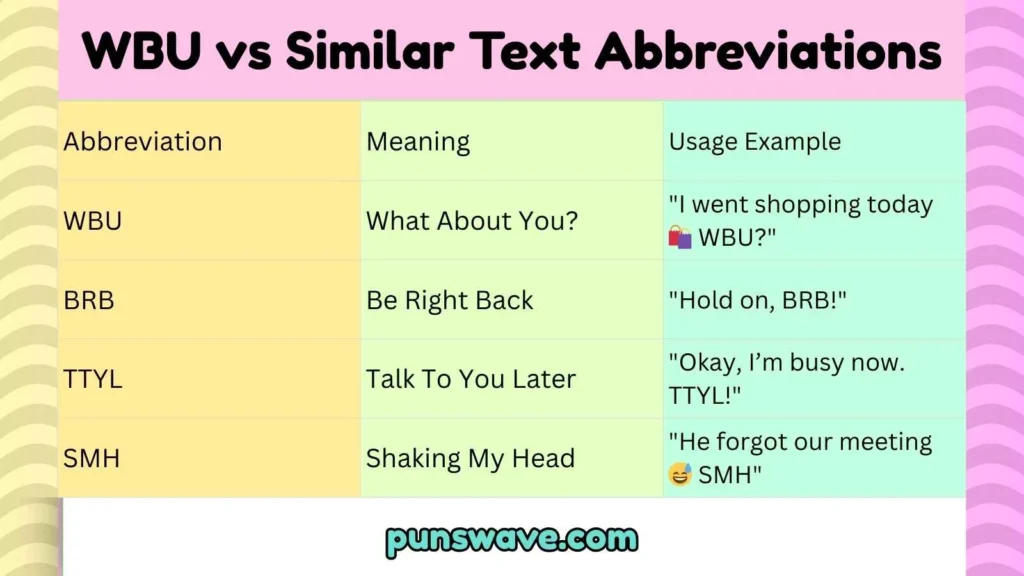
| Abbreviation | Meaning | Usage Example |
|---|---|---|
| WBU | What About You? | “I went shopping today 🛍️ WBU?” |
| BRB | Be Right Back | “Hold on, BRB!” |
| TTYL | Talk To You Later | “Okay, I’m busy now. TTYL!” |
| SMH | Shaking My Head | “He forgot our meeting 😅 SMH” |
How to Respond to WBU ✅
Responding to WBU is simple. You just share your experience, opinion, or feeling back:
- Example 1: “I just had lunch 🍕 WBU?” – Response: “I’m having a salad 🥗”
- Example 2: “I watched the new show last night 📺 WBU?” – Response: “Not yet, planning to tonight!”
Always keep it casual and friendly. Adding emojis makes your response more relatable. 😄
WBU in Professional vs Casual Settings ⚖️
While WBU is widely used among friends, peers, and casual online chats, it’s less formal for **professional communication**. In workplaces, you may want to use the full phrase: “What about you?” This keeps your tone polite and professional. 🏢
Texting Tips: Using WBU Effectively ✨
- Use it sparingly to avoid sounding repetitive.
- Combine with emojis for friendly conversations.
- Respond appropriately based on context (casual vs formal).
- Remember tone: written text can be misinterpreted without facial cues.
Fun Facts About WBU 🤩
- WBU is part of a broader trend of **internet acronyms** like “OMG,” “LOL,” and “IDK.”
- It’s widely understood by teens, young adults, and even older social media users.
- It promotes **reciprocal conversations**, making chats feel more interactive.
WBU and Cultural Variations 🌎
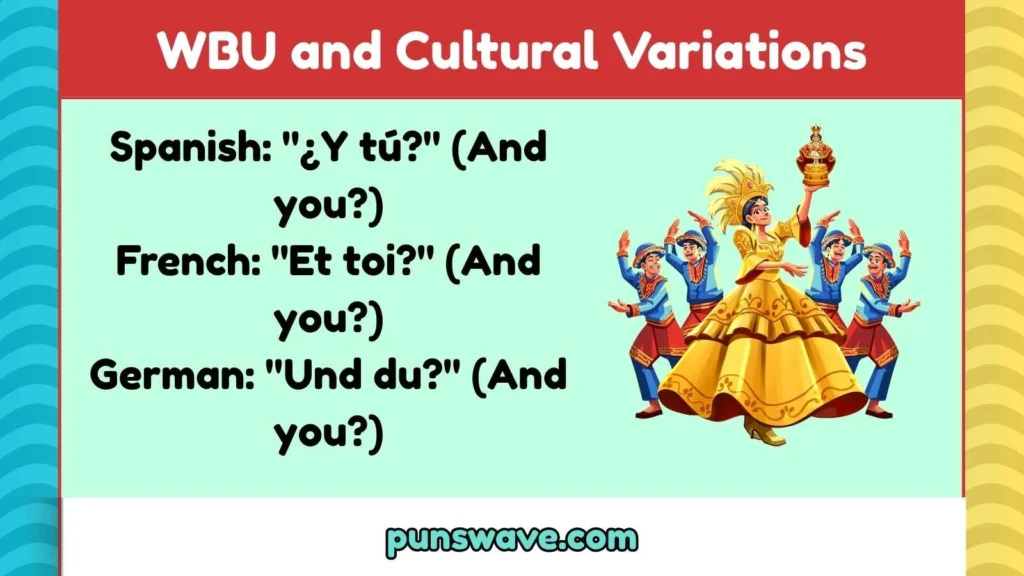
Texting slang like WBU is common in English-speaking countries, but international users might substitute it with local equivalents:
- Spanish: “¿Y tú?” (And you?)
- French: “Et toi?” (And you?)
- German: “Und du?” (And you?)
This shows how universal the idea is, even if the abbreviation differs. 🌐
Common Mistakes to Avoid With WBU ❌
- Using WBU in formal emails or professional messages.
- Overusing it in a single conversation.
- Ignoring punctuation—adding a question mark makes it clearer.
- Not responding back when someone asks WBU—it can seem rude.
Examples of WBU in Text Threads 📲
Chat 1:
Alex: “Just finished my morning run 🏃♂️”
Jordan: “Nice! WBU?”
Alex: “I’m about to start mine!”
Chat 2:
Sam: “I’m eating pizza 🍕 tonight”
Chris: “Yum! WBU?”
Sam: “I’ll grab a salad instead 🥗”
WBU in Social Media Comments 💬
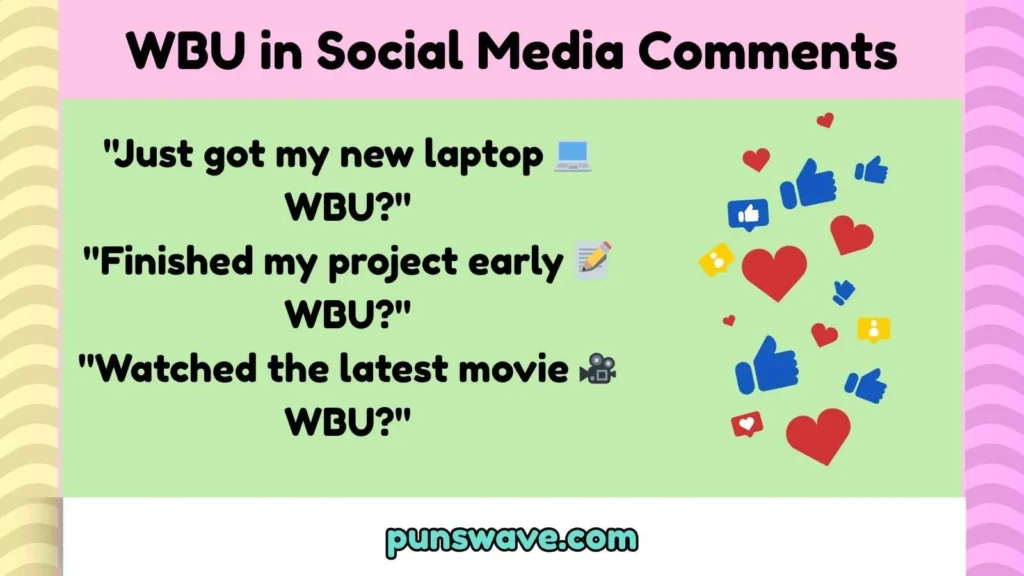
Many users employ WBU in comment sections to engage with posts:
- “Just got my new laptop 💻 WBU?”
- “Finished my project early 📝 WBU?”
- “Watched the latest movie 🎥 WBU?”
This keeps the conversation flowing and encourages others to share. 🔄
WBU vs WYD: Know the Difference ⚡
Sometimes people confuse WBU with WYD:
- WBU: “What About You?” – asks about someone’s opinion, feeling, or action.
- WYD: “What You Doing?” – asks about the person’s current activity.
Understanding this difference improves texting clarity. ✅
Psychology Behind Using WBU 🧠
Using WBU shows interest and reciprocity. People respond positively when asked about themselves. It signals engagement, friendliness, and social intelligence. 🌟
Fun Table of WBU Alternatives in Texts 📊
| Abbreviation | Meaning | When to Use |
|---|---|---|
| NM | Not Much | Reply to “WBU?” when you’re relaxed |
| GTG | Got To Go | When ending conversation |
| IDC | I Don’t Care | Informal, casual chats |
| BTW | By The Way | Adding extra info in conversation |
FAQs
1. Is WBU slang or formal? 🧐
WBU is informal slang, perfect for texting and social media, but not recommended in formal writing or professional emails.
2. Can WBU be used with emojis? 😄
Absolutely! Emojis enhance tone and make your message feel friendly and engaging.
3. How do I respond if I don’t want to answer? 🤐
You can politely redirect: “I’m busy right now, WBU?” or simply respond vaguely: “Just chilling.”
4. Is WBU widely understood by all age groups? 👥
Mostly younger audiences, teens, and millennials understand it. Older generations may need context.
Final Thoughts 🌟
WBU meaning in text is simple yet powerful. It fosters connection, engagement, and smooth conversation flow.
Whether you’re texting friends, family, or social media peers, using WBU appropriately makes you sound relatable and modern.
Remember to pair it with emojis, respond thoughtfully, and always consider context. 🚀

I love exploring the meaning behind words and ideas, turning simple thoughts into clear and engaging content. At Punswave, I focus on explaining meanings in an easy and interesting way for everyone.