Have you ever seen “TY” in a text, comment, or social post and paused, wondering what it really means? You’re not alone! In the age of rapid digital communication, abbreviations like TY meaning in text are everywhere — and they can be confusing if you’re not familiar with internet slang 😅.
In this in-depth guide, we’ll explore everything about “TY”: what it stands for, where it came from, how to use it correctly, real-world examples, and why understanding it matters in modern communication. Whether you’re texting friends, writing emails, or commenting online, we’ve got you covered 🔍
What Does “TY” Mean in Text? 🤔
In plain terms:
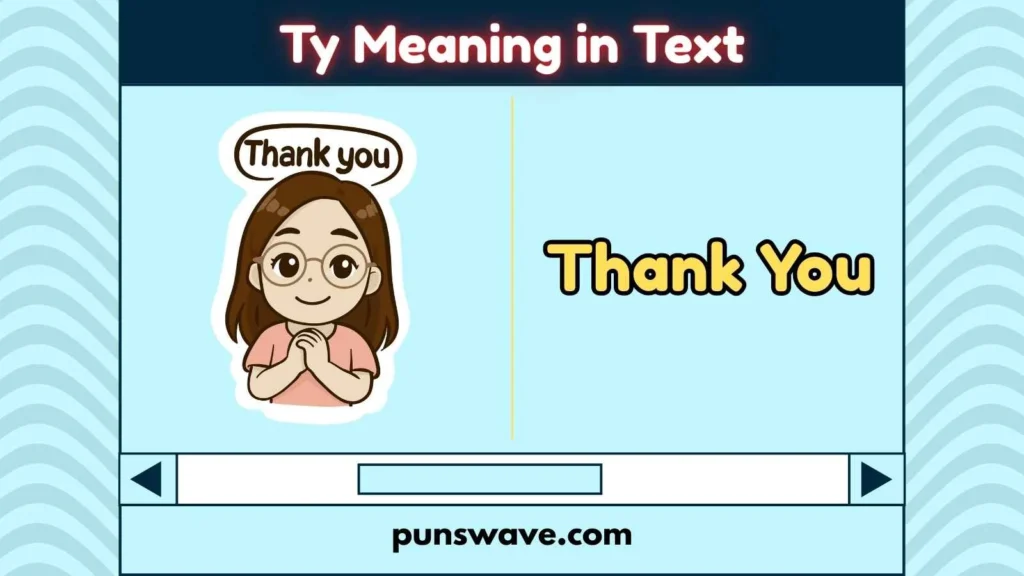
- TY stands for “Thank You.”
- It’s a short, informal way to express gratitude in digital conversations.
That’s it! Simple, short, and quick — perfect for fast texting or replying on social apps. It’s often used in place of typing out the full words “thank you,” especially when you want to keep the conversation light or efficient.
Examples of TY in Use
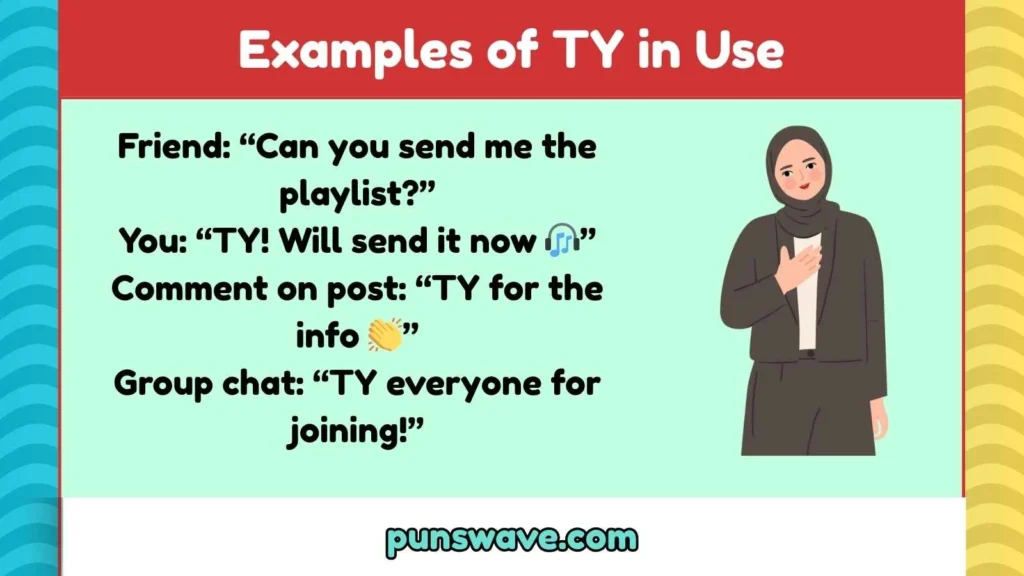
Here are a few examples of how “TY” fits into real conversations:
- Friend: “Can you send me the playlist?”
You: “TY! Will send it now 🎧” - Comment on post: “TY for the info 👏”
- Group chat: “TY everyone for joining!”
The Origin of TY: Where Did It Come From? 📜
Every acronym has a history, and “TY” is no exception! Though we don’t know the exact moment it was first used, the pattern is clear:
- Abbreviations in messaging began with early internet chat rooms.
- As texting became mainstream, acronyms like LOL, BRB, OMG, and TY spread rapidly.
- “TY” emerged as a simple and efficient way to say “thank you” without typing all three full words.
It’s a perfect example of how online culture shapes language — and how language adapts to technology! 💡
Why People Use TY (and Why It’s So Popular) 💡
“TY” became popular for several reasons:
- Speed: Shorter than typing “thank you.”
- Clarity: Easily understood by most users.
- Convenience: Works across devices — from phones to computers.
- Universal: Recognized in many languages and cultures online.
Using “TY” can feel casual and friendly — perfect for informal digital spaces like group chats, social platforms, and DMs. It’s a small expression, but it goes a long way in maintaining polite conversation 🎯
Where You’ll See TY Most Often 📍
“TY” appears in many places online, including:
- Text messages between friends and family.
- Social media comments (Instagram, TikTok, Twitter, Facebook).
- Online chat platforms like WhatsApp, Discord, and Snapchat.
- Forums and public message boards.
- Casual emails when tone is informal.
Its usage varies based on context — which brings us to our next section!
How to Use TY: Context Matters 📚
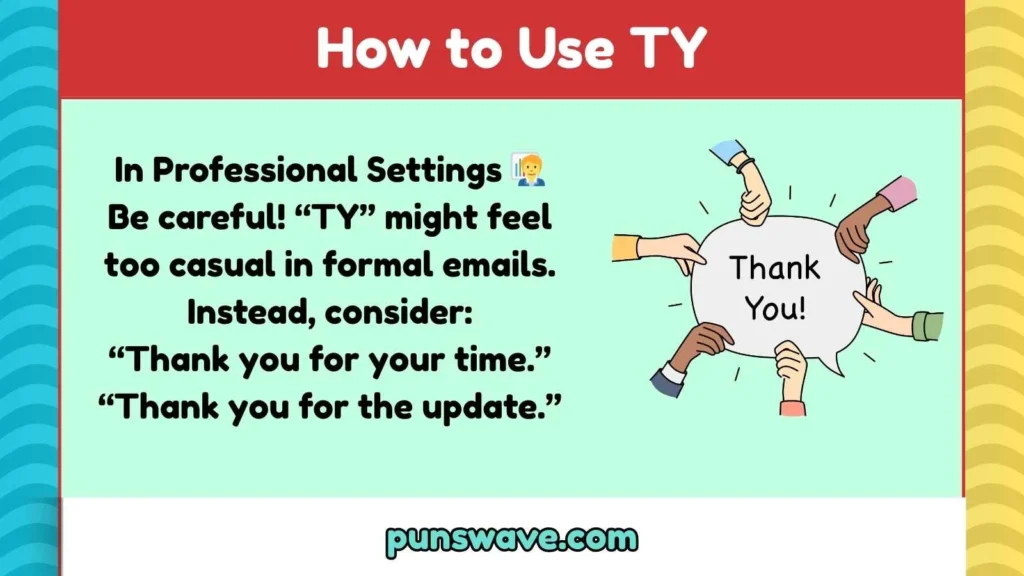
While “TY” is widely accepted, choosing when and how to use it can change the tone of your message. Here’s how to use it like a pro:
1. In Casual Conversations 💬
Perfect! For example:
- “TY for the birthday wishes!” 🎂
- “Can’t wait for lunch — TY!” 🍽️
This feels friendly and appreciative 👍
2. In Professional Settings 🧑💼
Be careful! “TY” might feel too casual in formal emails. Instead, consider:
- “Thank you for your time.”
- “Thank you for the update.”
Use “TY” only when you know the recipient appreciates casual language.
3. In Group Chats or Comments 💬
Here, “TY” is perfect:
- “TY for helping with the project!”
- “TY all for the awesome feedback! 🙌”
This keeps the vibe friendly and efficient.
TY Variations: More Ways to Say Thank You 😃
Besides “TY,” there are other common variations:
- “Thx” – A more casual or hip way to say thank you.
- “Tnx” – Another short variant.
- “TYSM” – Short for “Thank You So Much.”
- “TYT” – Means “Take Your Time” (different meaning!).
Knowing these variations helps you decode messages better and respond appropriately 😄
Examples of TY in Real Conversations ✨
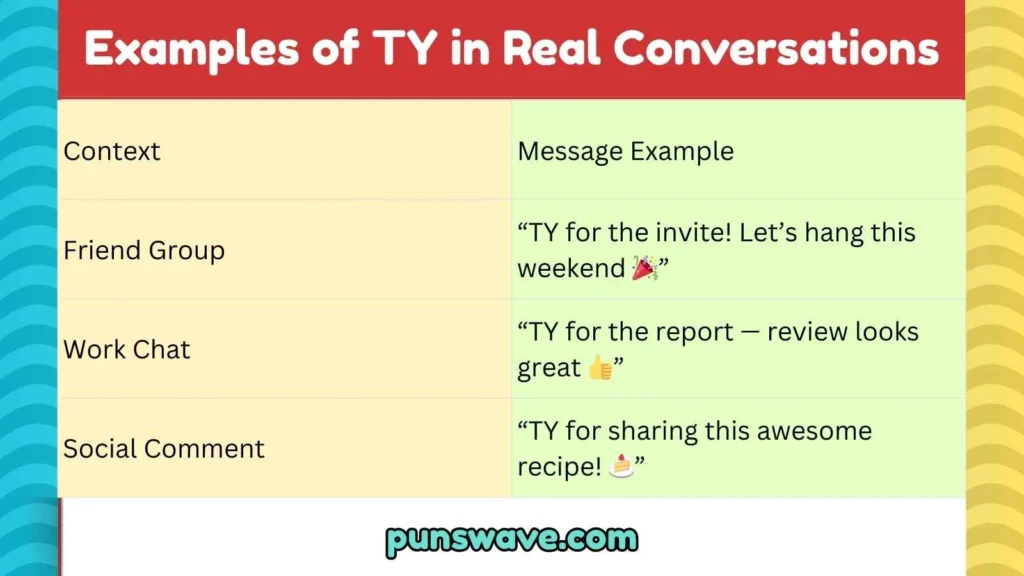
Here are some sample texts showing various ways “TY” might appear:
| Context | Message Example |
|---|---|
| Friend Group | “TY for the invite! Let’s hang this weekend 🎉” |
| Work Chat | “TY for the report — review looks great 👍” |
| Social Comment | “TY for sharing this awesome recipe! 🍰” |
Notice how “TY” keeps the message short and positive!
Common Mistakes with TY (and How to Avoid Them) 🚫
Even simple abbreviations can be used incorrectly. Here are common missteps:
- Using “TY” in formal emails when full gratitude is expected.
- Assuming everyone knows the acronym — always be mindful of your audience.
- Mistaking similar acronyms like “TYT” (means “Take Your Time”).
Pro tip: When in doubt, type the full phrase “Thank you” to avoid misinterpretation 💡
Why “TY” Works So Well in Digital Communication 💥
“TY” succeeds because of how people interact online:
- Fast-paced conversations require quick responses.
- Mobile typing can be slow — shorter is easier.
- Emojis and tone help express feelings beyond words.
By combining “TY” with emojis like 🙏 or 😊, you add warmth and personality to your messages ✨
Comparison: “TY” vs. Full “Thank You” 🆚
Here’s a quick comparison to help you decide which to use:
| Scenario | Use “TY”? | Use “Thank You”? |
|---|---|---|
| Texting friends | ✅ Yes | ⚠️ Optional |
| Formal email | ❌ Not recommended | ✅ Yes |
| Social media comment | ✅ Yes | ⚠️ Optional |
You can see how context matters when choosing your wording!
Fun Facts About TY 🎉
- “TY” is one of the shortest and most used texting acronyms 🌐
- It’s recognized globally, even by language learners 📘
- It can be paired with emojis to enhance tone 🥰
- Its simplicity reflects how communication is evolving ⚙️
FAQs
1. What does TY stand for in texting?
TY stands for *“Thank You”* — a shorthand way to express gratitude in digital communication.
2. Is TY rude or disrespectful?
No — it’s casual but polite when used with friends or in informal contexts 😊. Just avoid it in formal emails.
3. What’s the difference between TY and TYSM?
TYSM means *“Thank You So Much”* — it’s a stronger expression of appreciation than TY.
4. Can I use TY in professional settings?
Only if the tone is casual and your recipient is comfortable with text slang. Otherwise, spell out “Thank you.”
5. Are there similar abbreviations to TY?
Yes! Variations like “Thx” and “Tnx” also mean thank you.
Conclusion:
Understanding text slang like TY meaning in text isn’t just about decoding messages — it’s about connecting with people in the digital age.
This small abbreviation packs a big punch in communication, making conversations quicker, friendlier, and more expressive.
Now that you know what “TY” means, how to use it, and when to choose it over a full “thank you,” you’re ready to communicate with confidence in any digital setting 💪📱

I love exploring the meaning behind words and ideas, turning simple thoughts into clear and engaging content. At Punswave, I focus on explaining meanings in an easy and interesting way for everyone.