Have you ever received a text that simply said “SMS” and wondered, “What does that even mean?” 🤔 In the fast-paced world of texting, abbreviations like SMS pop up everywhere.
Understanding them can save confusion and make your messages sharper, smarter, and more meaningful.
Today, we’re diving deep into SMS meaning in text—its origins, usage, examples, and some insider tips to text like a pro!
What Does SMS Stand For? 📖
SMS stands for Short Message Service. It’s the official term for what most people call a “text message.” SMS is the backbone of mobile communication, letting you send quick messages from one phone to another without needing internet access.
The Simple Definition
In texting, SMS refers to any written message sent via a mobile device. Unlike chat apps, it uses the carrier network, which means you don’t need Wi-Fi to send messages.
Origin of SMS 📜
The concept of SMS was born in the 1980s and became widely available in the 1990s. It was originally designed to communicate with cellular networks and had a strict 160-character limit. Yes, that’s why texts used to feel so short! ✨
Fun Fact
Did you know? The first ever SMS was sent in 1992 and simply read: “Merry Christmas!” 🎄
How SMS Works in Texting ⚡
SMS works over a mobile network using the signaling channel. It’s fast, reliable, and can even reach phones without smartphones. Here’s how it typically works:
- You type a message on your phone 📱
- Your carrier sends it via its network 🔗
- The recipient receives it instantly 💌
SMS vs. MMS: What’s the Difference? 🤷♂️
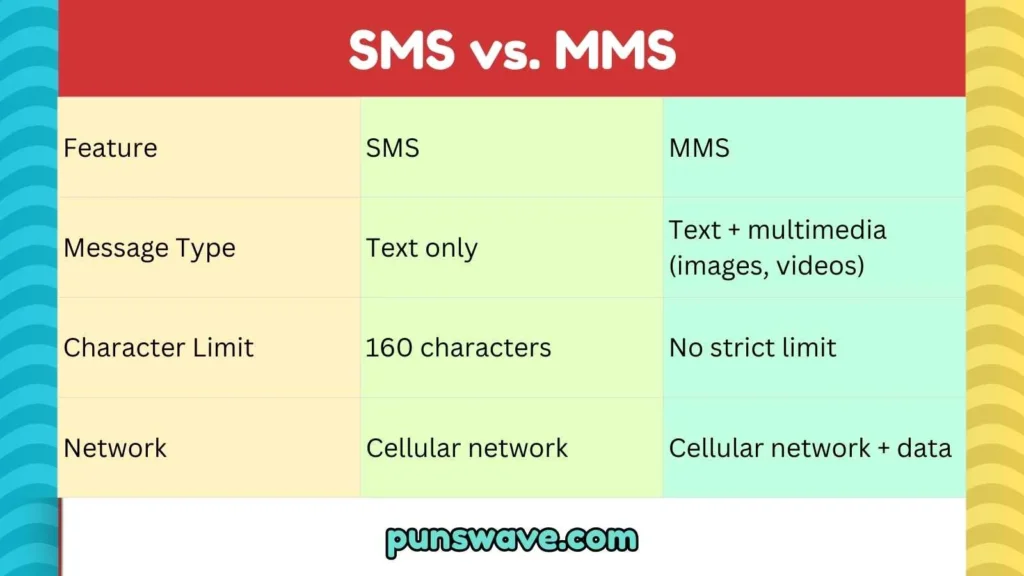
Many people confuse SMS with MMS. Here’s the difference:
| Feature | SMS | MMS |
|---|---|---|
| Message Type | Text only | Text + multimedia (images, videos) |
| Character Limit | 160 characters | No strict limit |
| Network | Cellular network | Cellular network + data |
Why People Use SMS Today 🌐
Even in the age of WhatsApp, Messenger, and iMessage, SMS remains popular because it’s:
- Reliable even without internet 🌎
- Works on every mobile phone 📱
- Simple and fast ⚡
- Good for alerts, notifications, and two-factor authentication 🔐
Common SMS Abbreviations and Meanings 📝
Texting often comes with its own mini language. Here are a few SMS-related abbreviations:
- LOL – Laugh Out Loud 😂
- BRB – Be Right Back ⏳
- TTYL – Talk To You Later 👋
- SMH – Shaking My Head 🤦♂️
- SMS – Short Message Service 💌
Examples of SMS in Text Conversations 💬
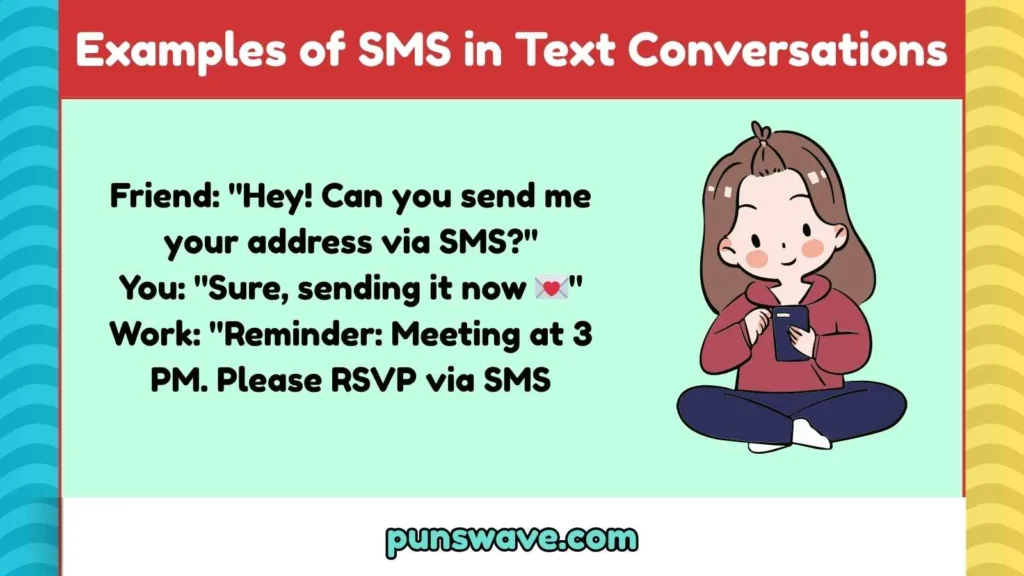
Here’s how SMS appears naturally in texting:
- Friend: “Hey! Can you send me your address via SMS?”
- You: “Sure, sending it now 💌”
- Work: “Reminder: Meeting at 3 PM. Please RSVP via SMS ✅”
Tips to Text Like a Pro Using SMS ✨
Want to level up your texting game? Here’s how:
- Be concise: Stick to the 160-character limit when possible.
- Use emojis: Add personality and clarity 💡
- Know your audience: Use formal SMS for work, casual for friends.
- Proofread: SMS is short, mistakes are noticeable!
- Timing matters: Respect local time zones when texting 📆
SMS Security Tips 🔒
While convenient, SMS is not immune to risks. Protect yourself with these tips:
- Don’t share sensitive information via SMS 🛑
- Enable two-factor authentication (2FA) via SMS cautiously 🔐
- Beware of SMS phishing or “smishing” scams ⚠️
- Regularly update your phone and carrier settings 🔄
SMS in Marketing 📈
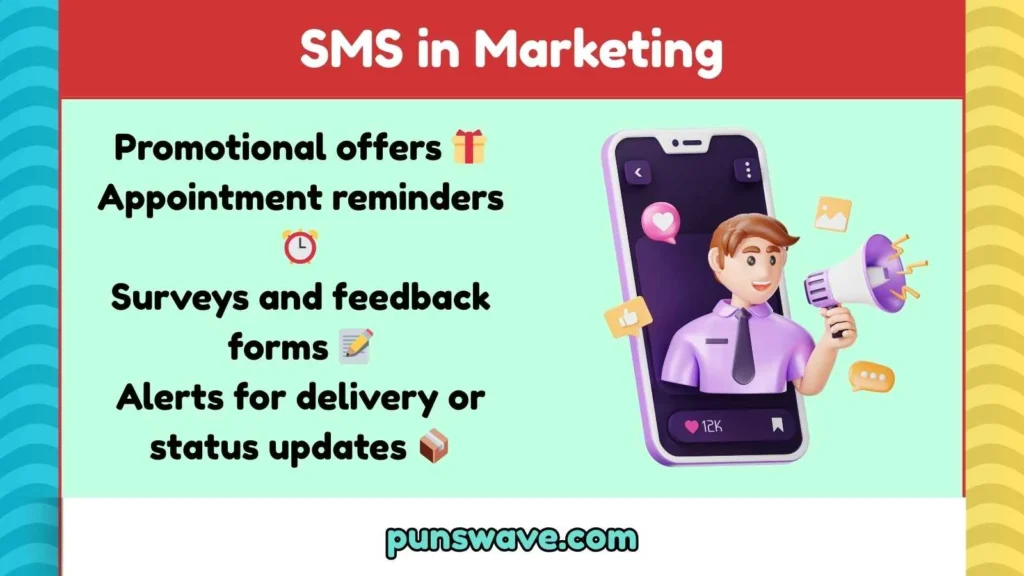
Businesses love SMS for its high open rates (up to 98%!) and instant reach. Common uses include:
- Promotional offers 🎁
- Appointment reminders ⏰
- Surveys and feedback forms 📝
- Alerts for delivery or status updates 📦
How SMS Changed Communication Forever 🌟
SMS revolutionized the way we communicate. Before emails and apps, a quick SMS was the fastest way to connect. It taught brevity, speed, and clarity in messaging—skills still valuable today.
Fun SMS Statistics You Should Know 📊
- Over 23 billion SMS messages are sent daily worldwide 🌍
- The average person checks texts 15+ times per day 📱
- SMS open rates are higher than emails at 98% vs. 20% 📧
Alternatives to SMS 💡
If you want more than just text, here are popular alternatives:
- WhatsApp 📲 – Internet-based messaging
- iMessage 🍏 – Apple devices only
- Facebook Messenger 🌐 – Works on all devices
- Telegram 🚀 – Secure and fast messaging
Common Misconceptions About SMS ❌
- SMS requires the internet: False! It uses cellular networks.
- SMS is outdated: While new apps exist, SMS is still widely used.
- SMS can send large files: No, only text and small media via MMS.
FAQs
1. Is SMS free to send?
Not always. SMS is often charged per message depending on your mobile plan. Some plans include unlimited texting 📱
2. Can SMS messages be hacked?
Yes, SMS is not fully encrypted. Be cautious with sensitive data and avoid sharing passwords via text 🔐
3. What is the difference between SMS and instant messaging apps?
SMS uses the mobile network and works offline, whereas instant messaging apps require internet connectivity 🌐
4. How many characters can an SMS have?
Each SMS is limited to 160 characters. Messages longer than this may be split into multiple SMS segments ✉️
5. Can businesses send marketing SMS legally?
Yes, but they must comply with laws like opt-in consent and unsubscribe options to avoid spam regulations 📜
Conclusion
Understanding SMS meaning in text is more than just knowing the acronym—it’s about knowing how this simple technology shapes communication.
From casual texts to business alerts, SMS remains an essential part of modern life. By mastering SMS etiquette and tips, you can text smarter, faster, and more effectively 💌

I love exploring the meaning behind words and ideas, turning simple thoughts into clear and engaging content. At Punswave, I focus on explaining meanings in an easy and interesting way for everyone.