TTYL meaning in text is one of the most searched slang phrases today, especially among people who text, chat, or message daily. If you’ve ever received a message that ends with “TTYL” and paused to wonder what it actually means—or how and when to use it—you’re in the right place 😊.
In today’s fast-moving digital world, texting shortcuts save time and add a friendly tone to conversations. TTYL is short, casual, and emotionally warm. But there’s more to it than just four letters.
This in-depth guide explains the TTYL meaning in text, its origin, real-world usage, examples, etiquette rules, and how it compares to similar slang. By the end, you’ll feel confident using it naturally—without sounding awkward or outdated.
What Does TTYL Mean in Text? 📱
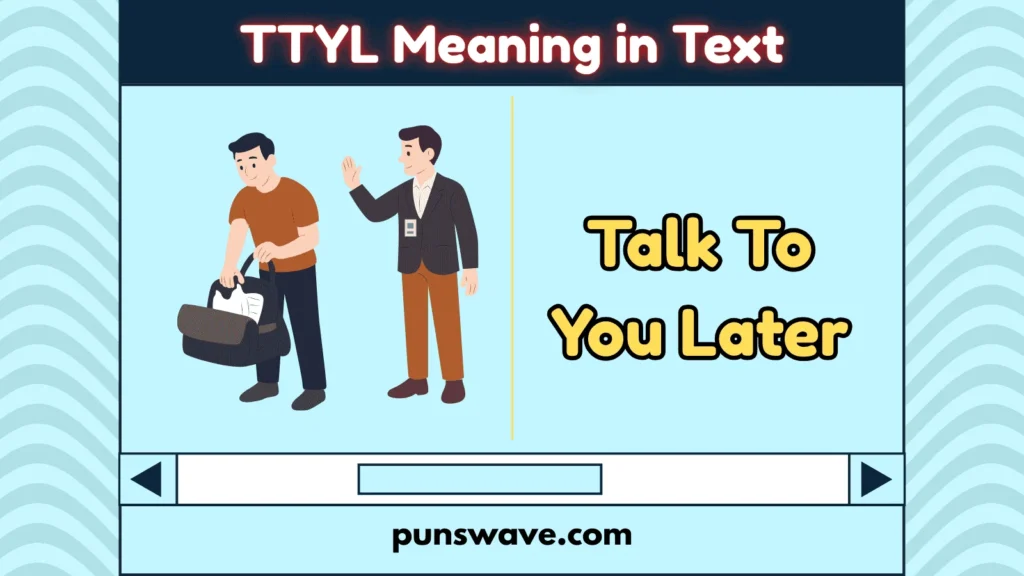
TTYL stands for “Talk To You Later.”
It’s commonly used at the end of a text or chat conversation to politely say goodbye while suggesting that the conversation will continue at a later time.
When someone uses TTYL in text, they are usually saying:
- “I have to go now”
- “We’ll talk again soon”
- “This isn’t a permanent goodbye”
Unlike a cold “bye,” TTYL feels friendly, relaxed, and reassuring ❤️.
“TTYL is not about ending a conversation—it’s about pausing it.”
The Origin of TTYL: Where Did It Come From? 🕰️
Understanding the TTYL meaning in text becomes even more interesting when you know its history.
Early Internet & Chat Room Culture
TTYL originated in the early 1990s during the rise of:
- Internet chat rooms
- IRC (Internet Relay Chat)
- Early instant messaging platforms
Typing full sentences was slow. Users needed fast, efficient ways to communicate. That’s when abbreviations like BRB, LOL, and TTYL became popular.
Transition to Text Messaging
When SMS texting became mainstream, character limits made shorthand even more valuable. TTYL quickly moved from chat rooms to mobile phones and later to social media and apps like WhatsApp, Instagram, and Snapchat.
Despite being decades old, TTYL meaning in text remains relevant today—a true digital classic 🌟.
How TTYL Is Used in Everyday Conversations 💬
TTYL is incredibly flexible and fits many casual scenarios.
Casual Friend Conversations
This is the most common use. Friends use TTYL to sign off without sounding distant.
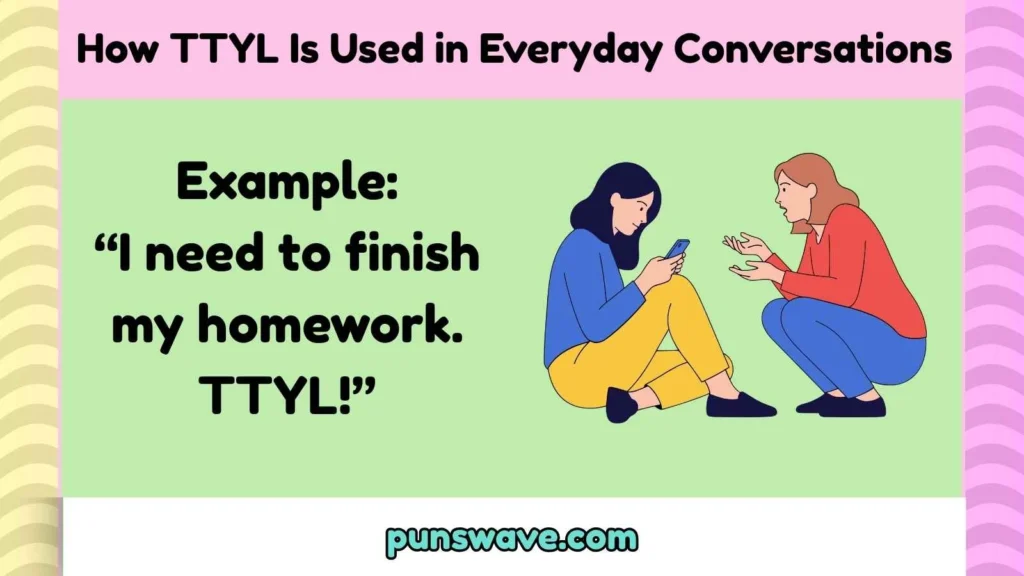
Example:
“I need to finish my homework. TTYL!”
Family Chats
Family members often use it in group chats or private messages.
“Dinner’s ready here. TTYL ❤️”
Romantic or Friendly Tone
TTYL can sound warm and affectionate when paired with emojis.
“I’ll call you later, okay? TTYL 😊”
TTYL Meaning in Text vs Real Life Speech 🗣️
Interestingly, TTYL is mostly a written expression. People rarely say “tee-tee-why-el” out loud.
Instead, in spoken language, we naturally say:
- “Talk later”
- “I’ll call you”
- “Catch up soon”
This makes TTYL a uniquely digital phrase—designed for screens, not speech.
Is TTYL Formal or Informal? 🤔
TTYL meaning in text is firmly informal.
Appropriate Situations
- Friends
- Close coworkers
- Family members
- Casual online conversations
Situations to Avoid
- Professional emails
- Job interviews
- Client communication
- Formal academic messages
Using TTYL in formal contexts can appear unprofessional or immature.
TTYL Meaning in Text: Emotional Tone Explained 💡
The emotional tone of TTYL is generally:
- Friendly
- Polite
- Relaxed
- Positive
It softens the goodbye and reassures the reader that the connection continues.
Adding emojis can enhance tone:
- TTYL 😊 (friendly)
- TTYL ❤️ (affectionate)
- TTYL 😴 (tired but polite)
Real-Life Examples of TTYL in Text Messages 📩
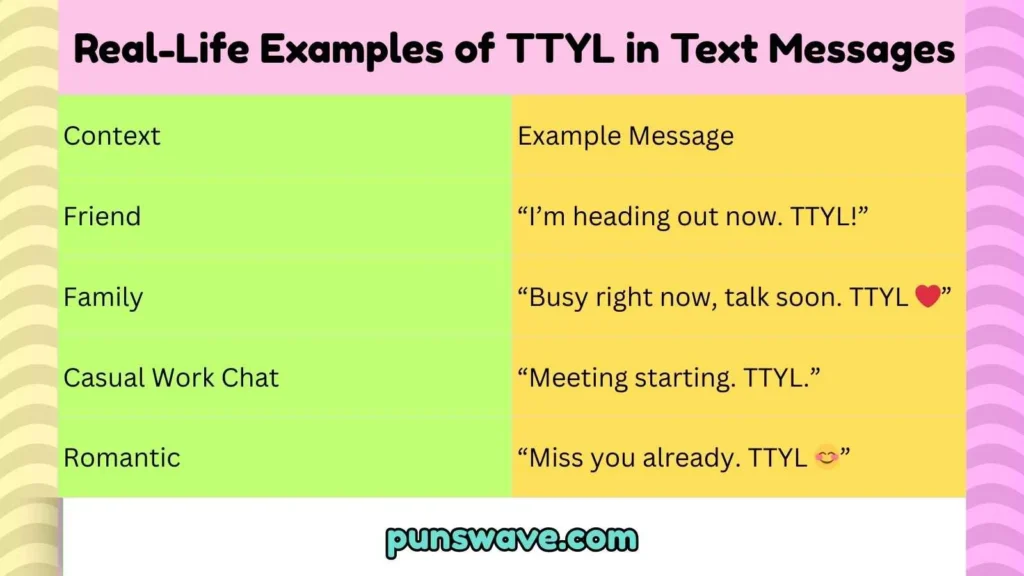
| Context | Example Message |
|---|---|
| Friend | “I’m heading out now. TTYL!” |
| Family | “Busy right now, talk soon. TTYL ❤️” |
| Casual Work Chat | “Meeting starting. TTYL.” |
| Romantic | “Miss you already. TTYL 😊” |
Common Variations of TTYL 🔄
Texting culture has created multiple versions of TTYL.
- TTYS – Talk To You Soon
- TTFN – Ta-Ta For Now
- BRB – Be Right Back
- GTG – Got To Go
Each variation has a slightly different tone, but all serve a similar purpose.
TTYL vs BRB vs GTG: What’s the Difference? ⚖️
| Slang | Meaning | Usage |
|---|---|---|
| TTYL | Talk To You Later | Ending conversation |
| BRB | Be Right Back | Short pause |
| GTG | Got To Go | Urgent exit |
TTYL is the most relaxed and polite of the three.
Is TTYL Still Popular in 2026? 📊
Yes! Despite newer slang emerging, TTYL meaning in text remains widely used.
Why it still works:
- Easy to understand
- Emotionally neutral
- Universally recognized
- Not tied to one generation
It’s a timeless digital phrase that doesn’t feel outdated.
Common Mistakes When Using TTYL ❌
Avoid these common errors:
- Using it in professional emails
- Overusing it in serious conversations
- Pairing it with negative or angry messages
TTYL works best when the mood is light and friendly.
How to Respond When Someone Says TTYL 🤝
Simple responses work best:
- “Okay, talk soon!”
- “Sounds good 😊”
- “TTYL!”
Mirroring the tone keeps the conversation natural.
TTYL Meaning in Text for Different Age Groups 👥
Teenagers: Casual, quick, emoji-filled
Adults: Friendly and polite
Older Users: Less frequent but still understood
This wide understanding makes TTYL universally effective.
FAQs
What does TTYL mean in text?
TTYL means “Talk To You Later.” It’s a friendly way to end a conversation.
Is TTYL rude?
No. It’s polite and casual when used appropriately.
Can I use TTYL at work?
Only in very informal chats with coworkers you know well.
Is TTYL outdated?
No. It’s still widely used and understood.
What emoji goes best with TTYL?
😊 ❤️ 👋 are common and friendly choices.
Final Thoughts:
TTYL meaning in text is simple, friendly, and timeless. It shows politeness, keeps conversations warm, and signals that communication will continue.
Whether you’re chatting with friends, family, or close contacts, TTYL remains a reliable and natural way to say goodbye.
Understanding how and when to use it helps you sound confident

I love exploring the meaning behind words and ideas, turning simple thoughts into clear and engaging content. At Punswave, I focus on explaining meanings in an easy and interesting way for everyone.